Preparing an Android fleet
Gather device details, choose a first test device and prepare the connection questions before evaluating Android fleet automation.
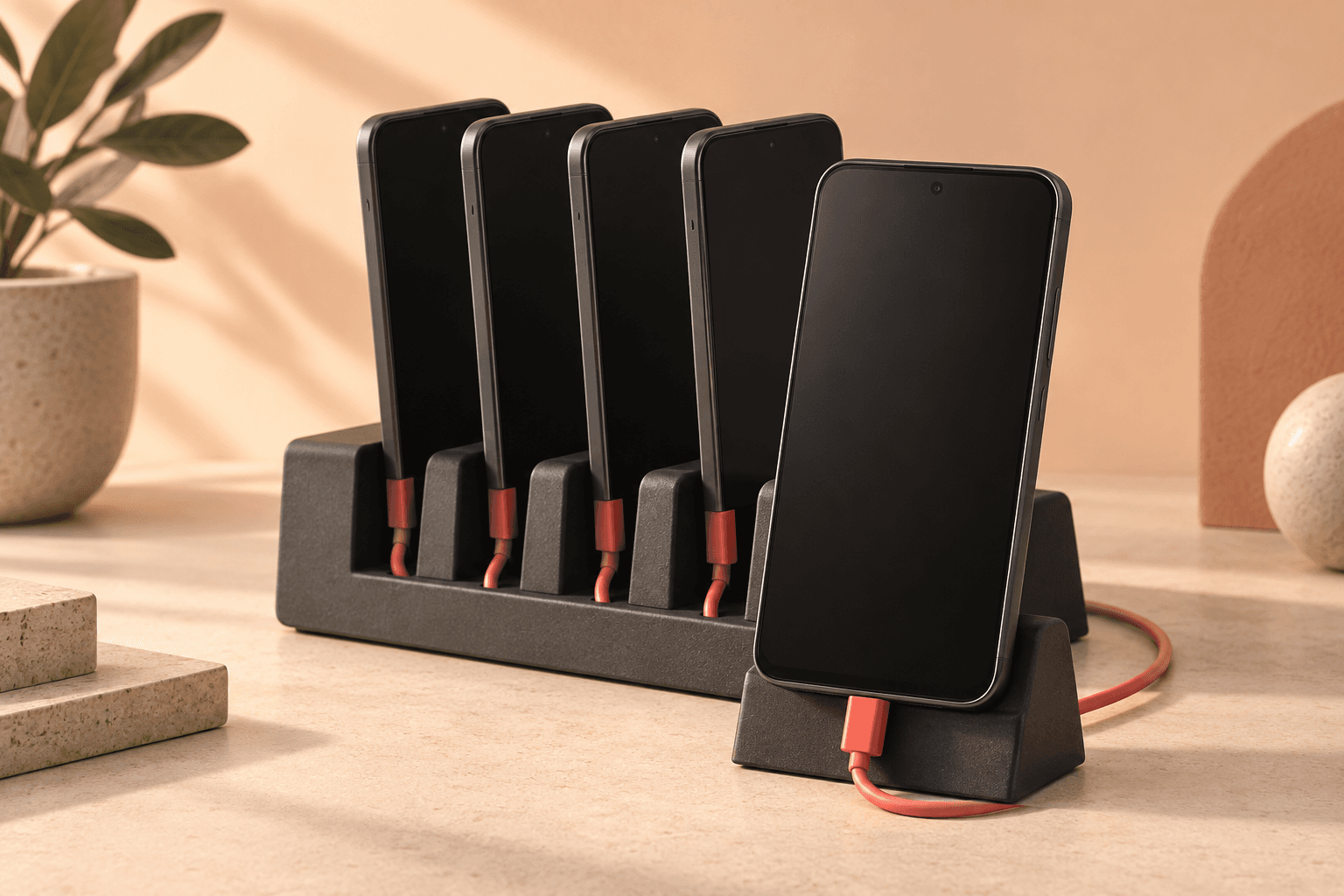
AI-generated editorial illustration; not a product screenshot.
1. Start with a task, then count the devices
A fleet size alone says little about the work you want to automate. Describe one repeated task: who performs it, which application is involved, what the starting state looks like and how the operator recognises completion. Keep the first description short enough for another person to repeat manually.
Record which devices are involved in that task. If the same fleet serves several purposes, separate those groups in your notes. A useful starting point is a small, understood workflow with an observable result, rather than a list of every process the team may eventually automate.
2. Make a compact device inventory
For each relevant group, record the device model, Android version, application and application version, approximate device count and the person responsible for access. Add a recognisable device reference so a test result can later be matched to the correct target. This can be a simple working document; it does not depend on a particular Taptain screen.
Mark unknown details as unknown and assign someone to check them. Do not treat similar-looking devices as an identical environment. Keep differences visible so a successful check on one configuration is not mistaken for evidence about all the others.
3. Choose the first device deliberately
Choose a device the owner has approved for the proposed task. Confirm who can check its initial state and inspect it after execution. Define the allowed actions and any work that must stay outside the test before a scenario is run.
Write down why this device represents the first group in your inventory. If it differs from the rest of that group, record the difference. The goal is to understand the result of one bounded check and the limits of what that result tells you.
4. Prepare the Farm Connector questions
Farm Connector is the component that links the environment containing your devices to Taptain. Before execution, the connection, permissions and supported operations must be checked for that environment. The name of the connector alone does not establish compatibility with a device or application.
Ask where the component would be configured in your setup, who would maintain the connection, which permissions the task requires and how the available actions will be verified. Bring these questions to the demo with your administrator if they manage device access. Installation location, required rights and setup effort depend on the arrangement being discussed.
5. Agree how to accept the first result
Before testing, write down the starting state, the planned sequence and the observable outcome. Keep the device reference, relevant versions and scenario description with the result. This lets an operator understand what was checked without reconstructing it from memory.
Taptain provides execution status and run diagnostics. Use the information available for the run alongside a check of the device outcome. A dry run checks the plan without confirming device execution; a recorded or accepted task is also insufficient on its own to prove that the intended work finished.
6. Leave the discussion with a concrete next check
After a first demonstration or test, return to the inventory. Separate configurations you have checked from those still open, list connection questions and note any difference between the expected and observed result. Plan another bounded check when a device group or application version differs.
For a demo request, share a summary: fleet size, main configurations, one repeated task and the questions you want to resolve. Do not include passwords, access tokens, customer records or production logs. Device access is not required to submit the request.
Get to know Taptain
Start with the product capabilities and an automation example.
Personal demos are coming
Demo booking is not open yet. Explore Taptain’s capabilities, run the example scenario on this site and read the guides to preparing your Android fleet.